
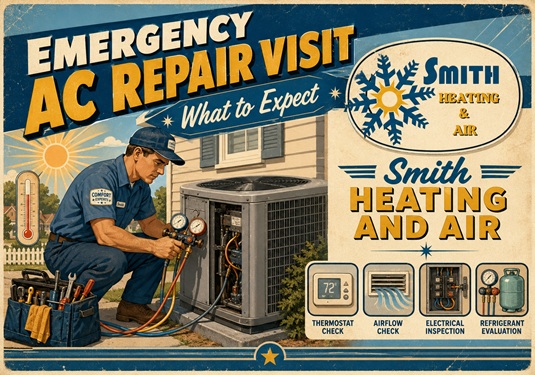
When your cooling system fails during a hot Knoxville day, an air conditioning repair visit can feel urgent and unfamiliar. Knowing what the technician will inspect helps you prepare, ask informed questions, and understand the recommended solution.
Smith Heating and Air begins each visit by listening to what happened before the system stopped working. Details such as unusual noises, weak airflow, breaker trips, water near the unit, or warm air can help the technician narrow the search quickly.
The Technician Starts With Questions and a Safety Check
The visit usually begins with a short conversation about the system’s recent behavior. The technician may ask when the problem started, whether the thermostat changed, and whether the equipment shut down suddenly or lost cooling over time.
This first step helps with identifying air conditioning emergency conditions that may involve electrical hazards, overheating parts, refrigerant concerns, or water damage. The technician will also check for burning odors, visible smoke, damaged wiring, standing water, and excessive heat around the equipment.
Homeowners can make this step easier by sharing:
- When the system last worked normally
- Any sounds, odors, or leaks they noticed
- Whether the breaker tripped
- Recent thermostat changes
- Filter replacement history
- Previous repairs or recurring symptoms
Do not restart equipment that smells burned, produces sparks, or repeatedly trips a breaker. Leave it off until a trained technician confirms that it is safe to operate.
Air Conditioning Repair Inspection and Electrical Testing
Next, the technician inspects the indoor and outdoor equipment. This visual check can reveal loose wires, damaged components, clogged drains, dirty coils, failed motors, swollen capacitors, or signs of overheating.
Electrical testing follows because many emergency AC problems begin with a failed electrical part. The technician may test voltage, amperage, capacitors, contactors, safety switches, motors, and electrical connections to locate the exact point of failure.
A professional does not simply replace the first part that looks suspicious. Testing confirms whether the component failed on its own or whether another condition caused the damage.
For example, a weak capacitor may prevent the compressor or fan motor from starting. However, high electrical demand, a failing motor, or poor airflow may also place extra strain on that capacitor.
Airflow Checks Reveal Hidden Cooling Problems
After checking the electrical system, the technician evaluates airflow through the return vents, filter, indoor coil, blower, supply ducts, and registers. Restricted airflow can reduce comfort, freeze the evaporator coil, increase energy use, and cause the system to shut down.
Common airflow problems include:
- A heavily clogged air filter
- Blocked return or supply vents
- Dirt buildup on the evaporator coil
- A weak or failed blower motor
- Loose, crushed, or leaking ductwork
- Incorrect blower speed settings
The technician may measure the temperature difference between the return and supply air. These readings help show whether the system is transferring heat correctly or struggling because of airflow, refrigeration, or equipment problems.
Smith Heating and Air uses these findings to look beyond the immediate symptom. Correcting the underlying cause reduces the chance that the same failure will return after the technician leaves.
Refrigerant Evaluation and System Performance
When the system runs but does not cool properly, the technician may evaluate the refrigerant circuit. This process can include checking operating pressures, refrigerant-line temperatures, coil condition, and the temperature change across the system.
Low refrigerant does not disappear through normal use. It usually indicates a leak, so simply adding refrigerant without looking for the source may provide only temporary relief.
The technician may inspect for oil residue, damaged service valves, worn connections, or coil leaks. Depending on the findings, the technician may recommend further leak testing before adding refrigerant.
This stage also helps separate refrigerant concerns from other emergency air conditioning problems. A dirty coil, failed fan, restricted filter, or weak compressor can create symptoms that resemble an incorrect refrigerant charge.
Diagnosis, Repair Options, and Recommendations
air conditioning repair in Knoxville TN
Once testing is complete, the air conditioning contractor in Knoxville TN should explain what failed, why it failed, and what needs to happen next. A clear diagnosis connects the test results to the symptoms you noticed at home.
The technician may complete the repair during the same visit when the required part is available. Common same-day repairs may include replacing a capacitor, contactor, thermostat, drain switch, fuse, or another serviceable component.
For larger failures, the technician should explain:
- The recommended repair
- The necessary parts and labor
- Any immediate safety concerns
- Whether additional damage is likely
- The condition and age of the system
- Repair versus replacement considerations
- Steps that may prevent another breakdown
Reliable AC services should give you enough information to make a confident decision. You should understand the urgency, expected result, cost, and limits of the proposed work before approving it.
What Happens After the Repair Is Completed?
After completing the approved repair, the air conditioning contractor restarts the system and observes a full operating cycle. This final test confirms that the equipment starts correctly, moves air, removes heat, drains condensation, and shuts off as expected.
The technician may also recheck electrical readings, refrigerant performance, and supply-air temperature. These checks confirm that the repair corrected the problem instead of temporarily masking the symptom.
Before leaving, the technician should explain what was repaired and point out any maintenance concerns. You may also receive advice about filter changes, thermostat settings, drain care, coil cleaning, or future replacement planning.
Knoxville Homeowners Share Their Experiences
Fast response and clear communication matter when indoor temperatures begin to rise. These customer reviews show the type of service homeowners value during urgent cooling problems.
“Prompt, professional and very knowledgeable. Thank you for everything.”
“Called about 10:00 on a Monday morning during heat wave needing help with HVAC. Tech was at our house by 11:30. Problem fixed by 12:30. Unbelievable service during July. This company is so customer oriented.”
Preparing for an Emergency Service Visit
Clear access to the thermostat, indoor equipment, electrical panel, and outdoor unit can help the visit move efficiently. Secure pets and remove objects that may block the technician’s workspace.
You should also avoid taking equipment apart or attempting electrical repairs before help arrives. Basic observations are useful, but opening panels or handling damaged wiring can create serious safety risks.
Keep notes about recent symptoms and have any available maintenance records ready. This information can help the technician identify patterns and avoid repeating previous work.
Get Emergency Cooling Help in Knoxville
An emergency service visit should replace uncertainty with clear answers and a practical path forward. A careful inspection and verified diagnosis help ensure that the recommended repair addresses the actual cause of the breakdown.
Call Smith Heating and Air when your AC stops cooling, trips a breaker, leaks water, makes alarming noises, or creates unsafe indoor temperatures. Prompt service can restore comfort, protect your equipment, and prevent a smaller problem from becoming a costly failure.
See more heating and cooling on our Facebook page.
Smith Heating and Air
3416 Zion Ln
Knoxville, TN 37931
865-364-6479
https://smithheatandair.com/
Areas Served:
Knoxville, Fountain City, Farragut, Powell, Halls, Karns, Friendsville, Clinton, Concord, Kingston, Townsend, Greenback, Maryville, Oak Ridge, New Market, Kimberlin Heights, Corryton

0 Comments