
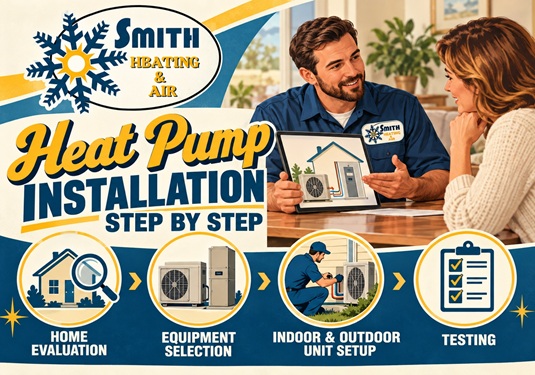
Heat pump installation involves more than placing new heating and cooling equipment in your home. A professional installation includes evaluating your home’s needs, selecting properly sized equipment, installing indoor and outdoor components, making electrical and refrigerant connections, and testing the entire system.
For homeowners in Farragut, TN, proper installation helps support reliable comfort throughout East Tennessee’s hot, humid summers and chilly winters. Understanding each step can help you prepare for the process and make informed decisions about your home’s comfort.
Step 1: How Does a Contractor Evaluate Your Home?
Before recommending equipment, a professional heating contractor evaluates your home’s layout, insulation, existing ductwork, and heating and cooling requirements.
During this assessment, the heating contractor may examine:
-
Home size, ceiling height, and room layout
-
Insulation levels and window efficiency
-
Existing ductwork and airflow
-
Electrical capacity and equipment location
-
Current comfort problems and energy usage
Homes in Farragut range from established properties to newer construction. Therefore, each installation should reflect the home’s specific characteristics rather than relying on square footage alone.
Step 2: Why Is Proper Heat Pump Sizing Important?
Correct equipment sizing is one of the most important parts of professional installation.
A contractor may perform a Manual J load calculation to estimate the home’s heating and cooling needs. This assessment considers insulation, windows, air leakage, local climate conditions, and other factors.
An oversized unit may cycle too frequently, while an undersized unit may struggle during temperature extremes.
Proper sizing helps support:
-
More consistent indoor temperatures
-
Better humidity management
-
Efficient system operation
-
Reduced unnecessary equipment cycling
-
Reliable year-round comfort
Step 3: How Is the Right Equipment Selected?
After evaluating the home, the technician recommends equipment that matches its comfort requirements.
Modern heat pumps provide both heating and cooling by transferring heat rather than generating it through combustion.
Equipment selection may include reviewing efficiency ratings, variable-speed technology, available electrical capacity, and compatibility with existing ductwork.
For Farragut homeowners, summer humidity and winter temperature changes are important considerations. Some installations may also require supplemental heating for colder conditions.
Step 4: What Happens to the Existing Heating System?
When replacing an older heating system, technicians typically disconnect and remove equipment that is no longer needed.
This process may involve:
-
Safely disconnecting electrical connections
-
Recovering existing refrigerant using appropriate equipment
-
Removing indoor and outdoor components
-
Inspecting refrigerant lines and duct connections
-
Preparing the installation area
Existing components should only be reused when they are compatible with the new equipment and meet manufacturer requirements.
Step 5: How Are the Indoor and Outdoor Units Installed?
The outdoor unit is positioned on a suitable pad or mounting surface with adequate clearance for airflow and future maintenance.
Inside the home, technicians install or connect the indoor air handler or compatible coil.
They also inspect duct connections, condensate drainage, and accessibility for future service.
Proper placement matters because restricted airflow, poor drainage, or unstable mounting can affect system performance.
Step 6: What Electrical and Refrigerant Connections Are Required?
 Professional technicians connect the electrical wiring, refrigerant lines, condensate drainage, and system controls.
Refrigerant lines must be properly connected, leak-tested, evacuated, and charged according to manufacturer specifications.
Electrical connections must also meet applicable safety requirements and local codes.
These technical steps are important because improper connections can contribute to reduced efficiency, equipment damage, or future service problems.
Step 7: How Are the Thermostat and System Tested?
Once the equipment is installed, technicians configure the thermostat and verify communication between system components.
Testing may include checking:
-
Heating and cooling operation
-
Airflow and temperature differences
-
Refrigerant operating conditions
-
Electrical performance
-
Thermostat settings
-
Condensate drainage and safety controls
A professional should also explain how to operate the new system, change filters, and recognize signs that service may be needed.
What Should Farragut Homeowners Know About Heat Pump Installation?
Farragut and the greater Knoxville area experience warm, humid summers, seasonal temperature swings, and occasional freezing winter conditions.
These factors make equipment sizing, humidity control, and supplemental heating considerations especially important.
Additionally, older Knoxville-area homes may require ductwork improvements or electrical upgrades before new equipment can operate as intended.
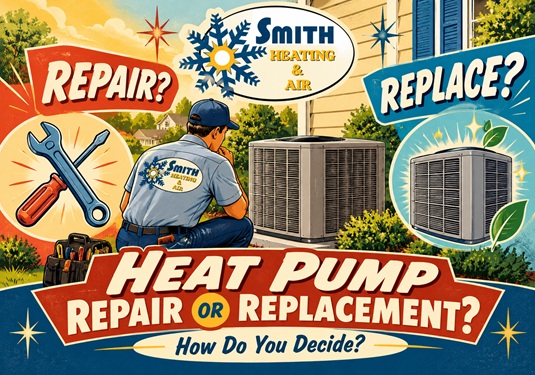
Although heat pump repair can extend the usefulness of existing equipment, replacement may be appropriate when a system has recurring problems or no longer meets household comfort needs.
Frequently Asked Questions About Heat Pump Installation
How long does a heat pump installation take?
Many straightforward replacements can be completed within a day, but installations requiring ductwork modifications, electrical upgrades, or other improvements may take longer.
Can a heat pump use existing ductwork?
Yes, many systems can connect to existing ductwork. However, the ducts should be evaluated for airflow capacity, leakage, and compatibility.
Do heat pumps work during Tennessee winters?
Yes. Modern systems can provide heating during cold weather. Performance depends on the equipment and outdoor temperatures, and supplemental heating may be needed.
Does a new heat pump require a new thermostat?
Not always. Some existing thermostats are compatible, while others must be replaced to support the new equipment’s controls and features.
Is professional installation necessary?
Yes. Qualified professional installation helps ensure proper sizing, safe electrical connections, correct refrigerant handling, and manufacturer-compliant operation.
Schedule Heat Pump Installation in Farragut, TN
A properly installed heat pump can provide dependable heating and cooling for your home throughout the year. From the initial evaluation to final testing, every stage contributes to comfort, efficiency, and long-term equipment performance.
Smith Heating and Air helps homeowners in Farragut, Knoxville, and surrounding East Tennessee communities evaluate their heating and cooling needs and choose suitable equipment.
Call Smith Heating and Air today to discuss professional heat pump installation and find the right comfort solution for your home.
Smith Heating and Air
3416 Zion Ln
Knoxville, TN 37931
865-364-6479
https://smithheatandair.com/
Areas Served:
Knoxville, Fountain City, Farragut, Powell, Halls, Karns, Friendsville, Clinton, Concord, Kingston, Townsend, Greenback, Maryville, Oak Ridge, New Market, Kimberlin Heights, Corryton



0 Comments