
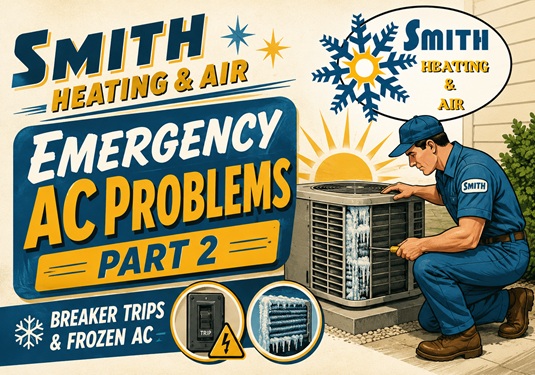
Part 1 explained how emergency AC problems can cause sudden shutdowns, weak cooling, and warm air from the vents. It also covered thermostat errors, failed capacitors, clogged drains, restricted airflow, refrigerant concerns, dirty coils, duct leaks, and outdoor unit failures.
In Part 2, we focus on recurring electrical trips and ice forming on the cooling system. Smith Heating and Air explains what may cause these warning signs, which checks homeowners can perform safely, and when professional service can prevent further damage.
Why Does My Air Conditioner Keep Tripping the Breaker?
An AC tripping breaker may indicate that the cooling system is drawing more electrical current than the circuit can safely carry. The breaker interrupts power to reduce the risk of overheated wiring, equipment damage, or an electrical fire.
A breaker may trip once because of a temporary power surge. However, when the same breaker trips again after one reset, the air conditioner likely has an electrical or mechanical fault that needs professional diagnosis.
Electrical Overloads During Hot Weather
Air conditioners work harder during long periods of high summer temperatures. If a motor struggles to start, a capacitor weakens, or the system operates under excessive pressure, its electrical demand may rise above the breaker’s limit.
An overloaded circuit may also serve too many electrical devices. In other cases, an aging breaker may weaken and trip before the cooling equipment reaches its normal operating load.
Compressor Problems and High Electrical Demand
The compressor uses a large amount of power when it starts. Internal wear, overheating, damaged windings, or abnormal refrigerant pressure can make it pull too much current.
A damaged compressor may hum, start briefly, or fail to run. Because compressor testing involves high voltage and specialized equipment, homeowners should leave this work to a qualified air conditioning contractor.
Wiring, Capacitors, and Motor Failures
Loose terminals, damaged insulation, corroded connections, and overheated wires can interrupt normal electrical flow. These faults may create heat, arcing, burning odors, or repeated system shutdowns.
A failed capacitor may prevent the blower motor, condenser fan, or compressor from starting correctly. Likewise, a failing motor may bind or overheat until the breaker cuts power.
Why Repeated Breaker Resets Are Unsafe
Homeowners may check the electrical panel and reset a tripped breaker one time. First, turn the thermostat off, move the breaker completely to the off position, and then return it to the on position.
Do not keep resetting the breaker if it trips again. Repeated resets restore electricity to an active fault without correcting its cause, which may damage wiring or place major components under additional stress.
Turn the cooling system off and arrange service when you notice:
- A breaker that trips more than once
- Smoke, sparks, or a burning smell
- Buzzing or humming near the equipment
- An outdoor unit that starts and stops abruptly
- Unusual heat near the disconnect box
- A breaker that will not remain on
An air conditioning contractor can test the system’s amperage, voltage, capacitors, motors, wiring, and compressor. These readings help determine whether the fault comes from the cooling equipment, the electrical circuit, or several connected problems.
What Causes an Air Conditioner to Freeze Up?
A frozen air conditioner cannot absorb indoor heat or move cooled air through the home correctly. Ice may appear on the evaporator coil, copper refrigerant line, indoor cabinet, or nearby tubing.
Although the ice appears to be a sign of strong cooling, it means the system is not operating normally. Moisture from indoor air freezes on the coil when its surface temperature falls below freezing.
Restricted Airflow Across the Evaporator Coil
The indoor coil needs a steady flow of warm return air. When too little air passes across it, the coil can become cold enough for condensation to freeze.
A heavily clogged filter is one of the most common airflow restrictions. Closed vents, blocked return grilles, dirty coils, crushed ducts, or improperly sized ductwork may create similar conditions.
Check the filter and replace it when it appears heavily coated with dirt. Also make sure furniture, rugs, curtains, boxes, and other objects do not block supply vents or return grilles.
Low Refrigerant and Pressure Problems
local HVAC company
Low refrigerant can reduce pressure inside the evaporator coil. As the pressure falls, the coil temperature may drop below freezing even while the rooms inside the home remain warm.
Refrigerant does not disappear during normal operation. A low level usually points to a leak, an installation concern, or an earlier service problem that requires proper testing.
Simply adding refrigerant without locating the cause may provide only temporary relief. The system may freeze again and could suffer compressor damage if the underlying issue continues.
Dirty Coils and Blower Problems
Dust and debris on the evaporator coil create a barrier between the coil and the passing air. This buildup reduces heat transfer, weakens performance, and increases the chance of ice formation.
Blower problems can also restrict airflow. A weak capacitor, failing motor, dirty fan wheel, loose belt on older equipment, or incorrect speed setting may prevent the system from circulating enough air.
Smith Heating and Air can measure airflow and inspect the complete blower assembly. The results show whether cleaning, adjustment, electrical work, or component replacement will restore normal circulation.
Professional AC services should include more than removing visible ice. A technician should identify why the coil became cold enough to freeze and correct the condition before restarting the system.
Incorrect Thermostat Operation
A thermostat set extremely low can force the air conditioner to run for long periods. Continuous operation may expose an existing airflow or refrigerant problem and allow more ice to develop.
The thermostat’s fan setting can also affect the thawing process. Selecting “On” may keep the indoor fan moving air while cooling remains off, but homeowners should not restart the compressor until the ice has melted.
What Should You Do When You See Ice?
Turn the thermostat from “Cool” to “Off” as soon as you notice ice. Continuing to operate the compressor may worsen the freeze-up and place additional strain on expensive components.
Allow the system to thaw naturally. Do not chip the ice with a tool, pour hot water over the coil, or use a hair dryer because these methods can damage tubing, fins, wiring, and nearby materials.
Thawing may take several hours. Place towels near the indoor equipment if melting ice may create water, and check the surrounding area for drainage problems.
After the ice melts, replace a dirty filter and confirm that all vents remain open. If ice returns, airflow stays weak, or the house does not cool, leave the system off and arrange air conditioning repair.
Emergency AC Problems That Need Professional Diagnosis
Breaker trips and freeze-ups sometimes share related causes. For example, a struggling blower can reduce airflow, create ice, overheat, and eventually draw enough current to trip the breaker.
A technician should inspect the complete system instead of treating only the most visible symptom. Electrical readings, temperature differences, airflow measurements, refrigerant pressure, coil condition, drain operation, and system controls can reveal the actual failure.
Prompt AC service becomes especially important when the home reaches an unsafe temperature, the breaker repeatedly trips, or ice returns after thawing. Early diagnosis may protect the compressor, prevent water damage, and reduce the risk of a complete breakdown.
Before the service visit ends, homeowners should receive a clear explanation of what failed and why it happened. They should also understand the available repair options and whether another system problem contributed to the failure.
Call Smith Heating and Air when your air conditioner repeatedly trips a breaker, develops ice, loses airflow, or stops cooling. Schedule prompt service to restore safe operation, protect major components, and bring dependable comfort back to your Knoxville home.
See more heating and cooling on our Facebook page.
Smith Heating and Air
3416 Zion Ln
Knoxville, TN 37931
865-364-6479
https://smithheatandair.com/
Areas Served:
Knoxville, Fountain City, Farragut, Powell, Halls, Karns, Friendsville, Clinton, Concord, Kingston, Townsend, Greenback, Maryville, Oak Ridge, New Market, Kimberlin Heights, Corryton
0 Comments