
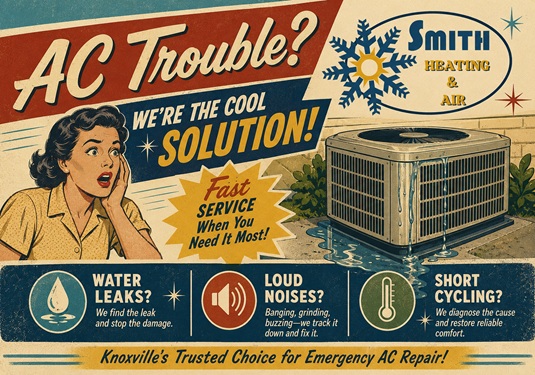
Understanding emergency AC problems helps homeowners respond quickly when a cooling system leaks, makes alarming sounds, or repeatedly shuts down. These warning signs may point to water damage, failing parts, electrical hazards, or conditions that could cause a complete system breakdown.
In Part 1, we covered sudden system shutdowns, central air systems that run without cooling, and units that blow warm air. We also explained how thermostat problems, failed capacitors, airflow restrictions, frozen coils, and refrigerant concerns affect home comfort.
Part 2 examined systems that trip circuit breakers and air conditioners that freeze during hot weather. Smith Heating and Air explained why homeowners should avoid repeatedly resetting breakers or operating equipment while ice covers the coils.
Part 3 focuses on water leaks, disruptive sounds, and frequent starting and stopping. These problems often require prompt attention because they can damage the system, increase energy use, and affect nearby areas of the home.
Why Is Water Leaking From My Air Conditioner?
An AC leaking water may have a blocked condensate drain line. During normal operation, the system removes moisture from indoor air and directs that water through a drain, but dirt, algae, and debris can block the pathway.
Once the line becomes clogged, water may back up into the drain pan or spill near the indoor unit. Some air conditioning systems include a safety switch that shuts off cooling when the drain line fills, while others continue running and allow water to spread.
A damaged or rusted drain pan can also cause leakage. Older metal pans may develop cracks or holes that allow condensation to drip onto floors, ceilings, insulation, or nearby equipment.
Frozen evaporator coils create another common source of water. When the ice melts, the drainage system may not handle the sudden amount of moisture, especially if the pan or drain line already has damage.
Condensate pump failures can cause leaks in systems that cannot drain through gravity. A failed motor, blocked tube, stuck float switch, or electrical issue may prevent the pump from moving collected water away from the unit.
Turn off the system when water reaches electrical components or spreads across a ceiling or floor. Prompt service can limit property damage and identify the condition that caused the leak.
Air Conditioner Making Loud Noises: When Is It an Emergency?
Air Conditioning Repair Services in Knoxville
An air conditioner making loud noise needs attention because each sound can point to a different mechanical or electrical problem. A sudden new sound usually matters more than the normal hum or airflow noise produced during operation.
Listen for these warning sounds:
- Banging: A loose or broken internal part may be moving inside the compressor or blower assembly.
- Grinding: Worn motor bearings or damaged moving parts may create metal-on-metal friction.
- Buzzing: Electrical connections, contactors, capacitors, motors, or outdoor components may be failing.
- Rattling: Loose panels, debris, fasteners, fan blades, or deteriorating equipment can cause vibration.
- Hissing: Refrigerant may be escaping, or pressurized air may be leaking from ductwork.
- Screeching: A worn belt, failing bearing, or motor problem may produce a high-pitched sound.
Grinding, loud buzzing, repeated banging, or electrical popping can signal an urgent problem. Shut the unit off when the sound comes with smoke, a burning smell, weak airflow, or shaking equipment.
A hissing sound also deserves professional evaluation when cooling performance drops. Refrigerant works inside a sealed system, so suspected leaks require trained diagnosis and proper equipment.
Smith Heating and Air can inspect the source of unusual noises before a loose or worn component damages additional parts. Early diagnosis may turn a developing failure into a smaller and less disruptive repair.
Why Is My AC Short Cycling?
AC short cycling occurs when the air conditioner starts and stops too often without completing a normal cooling cycle. The repeated operation places added stress on the compressor, fan motors, capacitors, and electrical controls.
Thermostat placement can cause this behavior. A thermostat located near a supply vent, sunny window, exterior door, kitchen, or heat-producing appliance may receive an inaccurate temperature reading.
Oversized equipment can also cool the surrounding air too quickly. The system reaches the thermostat setting before it removes enough indoor humidity, then restarts soon after the temperature rises.
Frozen coils may interrupt operation as well. Restricted airflow from a dirty filter, blocked return vent, dirty coil, or blower problem can lower coil temperature until ice forms.
Electrical problems can create irregular cycles. A failing capacitor, damaged contactor, loose connection, control board issue, or motor overload may repeatedly stop the system before it completes a cycle.
Low refrigerant or another refrigerant-related problem may also affect system pressure. Safety controls can then stop the equipment to reduce the risk of compressor damage.
When Emergency AC Problems Require Immediate Service
Some cooling issues can wait for a scheduled appointment, but others require faster action. Homeowners should turn the equipment off and arrange service when operation could threaten safety or cause additional damage.
Seek prompt help when you notice:
- Water near electrical wiring, outlets, or equipment
- Smoke, sparks, or burning odors
- Loud grinding, banging, or electrical buzzing
- Ice covering refrigerant lines or indoor coils
- Repeated breaker trips
- Rapid on-and-off operation that continues after basic checks
- Unsafe indoor temperatures during extreme heat
Do not remove electrical panels or attempt refrigerant repairs. These tasks expose homeowners to high voltage, pressurized refrigerant, and moving components.
Safe Steps Homeowners Can Take
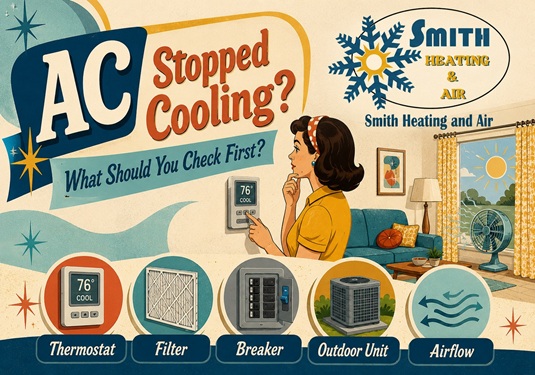
Start by checking the thermostat settings and replacing a visibly dirty air filter. Next, confirm that supply and return vents remain open and that furniture or household items do not block airflow.
You may also look for standing water around the indoor unit and visible ice on accessible refrigerant lines. Avoid opening equipment panels, touching damaged wiring, or breaking ice away from the coils.
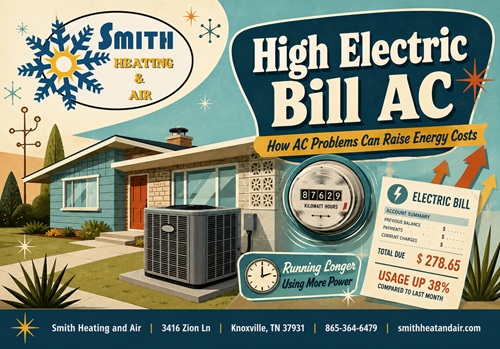
Turn the air conditioner off when it leaks heavily, makes harsh mechanical sounds, or cycles every few minutes. Continuing to run a struggling unit may increase repair needs and raise energy costs.
Why Professional Diagnosis Matters
Several cooling failures produce similar symptoms. For example, poor airflow, low refrigerant, electrical faults, and thermostat issues can all cause weak cooling or irregular cycles.
A qualified air conditioning contractor can test electrical components, inspect drainage parts, measure airflow, and evaluate refrigerant pressures. This process finds the underlying cause instead of treating only the visible symptom.
Professional AC services also help protect major components from preventable damage. Accurate testing allows the technician to recommend a repair based on the system’s condition, age, and performance.
Water leaks, loud noises, and frequent cycling rarely improve without addressing the cause. Timely air conditioning repair can protect your equipment, reduce the risk of property damage, and restore dependable cooling.
Smith Heating and Air serves Knoxville-area homeowners with professional diagnosis and practical solutions for urgent cooling concerns. Call Smith Heating and Air today to schedule service and get your home comfortable again.
See more heating and cooling on our Facebook page.
Smith Heating and Air
3416 Zion Ln
Knoxville, TN 37931
865-364-6479
https://smithheatandair.com/
Areas Served:
Knoxville, Fountain City, Farragut, Powell, Halls, Karns, Friendsville, Clinton, Concord, Kingston, Townsend, Greenback, Maryville, Oak Ridge, New Market, Kimberlin Heights, Corryton

0 Comments