
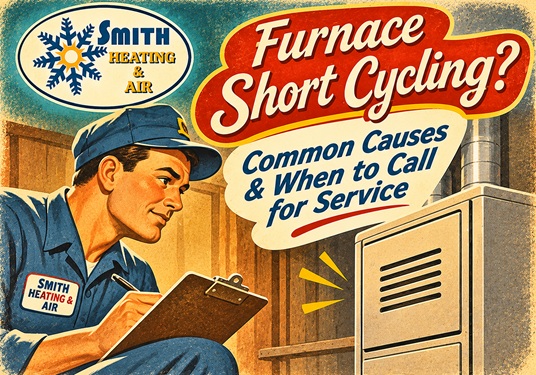
When your furnace turns on, runs for a few minutes, and shuts off before reaching the set temperature, it may be short cycling. This problem can leave rooms uncomfortable, increase energy use, and place extra stress on equipment. Knowing when to seek furnace repair can help Knoxville homeowners address the cause before it leads to a larger breakdown.
Short cycling can result from dirty filters, poor airflow, thermostat problems, overheating, or faulty components. Smith Heating and Air helps Knoxville homeowners identify heating problems and determine the right solution. Understanding the warning signs can help you decide when professional service makes sense.
What Is Furnace Short Cycling?
Furnace short cycling happens when a furnace repeatedly starts and stops without completing a normal heating cycle. Instead of running long enough to warm the home, the equipment shuts down early and may restart several minutes later.
A normal furnace also turns on and off throughout the day. However, frequent starts, uneven temperatures, and repeated shutdowns before the thermostat reaches its setting may indicate trouble.
There is no single cycle length that applies to every home. Outdoor temperatures, equipment size, thermostat settings, and heating demand all influence how long a furnace runs.
7 Common Causes of Furnace Short Cycling
Several problems can interrupt normal furnace operation. Some involve routine heating maintenance, while others require a trained technician to inspect internal components.
- Dirty or Clogged Air Filters
A dirty filter restricts airflow through the furnace. As a result, heat can build up inside the equipment and trigger a safety limit switch.
The furnace may shut off its burners to prevent overheating. Once temperatures drop, the system may attempt another heating cycle.
- Furnace Overheating
Overheating can occur when the furnace cannot move enough air across its heat exchanger. Blocked vents, restricted ductwork, or blower problems may contribute to this condition.
Repeated overheating can stress components and may signal a safety concern. A technician should identify why the equipment keeps reaching its temperature limit.
- Thermostat Problems
A thermostat controls when the furnace starts and stops. Incorrect placement, faulty sensors, loose connections, or electrical problems can cause unexpected cycling.
For example, a thermostat located near a heat source may detect a warmer temperature than the rest of the home. Consequently, it may shut down the furnace before other rooms become comfortable.
- Dirty Flame Sensor
Gas furnaces use flame sensors to confirm that burners ignite properly. A dirty or failing sensor may prevent the control board from detecting a stable flame.
For safety, the furnace can shut off the gas supply shortly after ignition. This problem requires professional diagnosis rather than repeated attempts to restart the equipment.
- Restricted Airflow
Closed registers, blocked return vents, dirty indoor components, and duct restrictions can reduce airflow. These conditions may cause uneven heating and unexpected shutdowns.
Homeowners can check whether furniture blocks accessible vents. However, persistent airflow problems deserve a professional inspection.
- Oversized Furnace
A furnace that produces too much heat for the home may warm the thermostat area quickly and shut off before distributing heat evenly.
Oversized equipment can also create comfort problems and excessive cycling. Proper equipment sizing matters when considering furnace replacement, especially in homes with uneven temperatures.
- Mechanical or Electrical Problems
A failing blower motor, defective limit switch, ignition issue, or control board malfunction can interrupt normal operation. These problems often produce similar symptoms despite having different causes.
Therefore, a qualified technician should test the equipment before recommending repairs.
When Does Short Cycling Require Furnace Repair?
 An occasional short cycle does not always mean the equipment has failed. However, repeated interruptions deserve attention, especially when the furnace struggles to maintain comfortable temperatures.
Smith Heating and Air recommends having recurring heating issues evaluated rather than waiting for the furnace to stop working completely.
Watch for these warning signs:
- The furnace starts and stops every few minutes.
- Indoor temperatures never reach the thermostat setting.
- Some rooms remain noticeably colder than others.
- The furnace makes unusual clicking or banging sounds.
- Energy bills increase without an obvious reason.
- The equipment shuts down shortly after ignition.
If you smell gas, leave the building and contact your gas utility or emergency services from a safe location. If a carbon monoxide alarm sounds, evacuate immediately and call emergency services.
How Professional Furnace Repair Helps Prevent Repeated Shutdowns
A professional heating contractor can examine the equipment and identify why the heating cycle ends early. Rather than guessing, technicians evaluate operating conditions and test components.
During an inspection, a technician may:
- Check filters, airflow, and accessible duct connections.
- Test thermostat operation and temperature readings.
- Inspect safety controls and ignition components.
- Evaluate blower operation and electrical connections.
- Look for signs of overheating or equipment faults.
These checks help determine whether the heating system needs maintenance, component repairs, or further evaluation.
For Knoxville homeowners, dependable heating becomes especially important when temperatures fall during late autumn and winter. Addressing recurring shutdowns early can reduce the risk of losing heat during colder weather.
Frequently Asked Questions About Short Cycling and Furnace Repair
Is it normal for a furnace to turn on and off frequently?
Furnaces cycle throughout the day, but repeated shutdowns after only a few minutes may indicate trouble. Cycle length depends on heating demand, equipment design, and outdoor conditions.
Can a dirty filter cause short cycling?
Yes. A clogged filter can restrict airflow and cause overheating. A furnace may then shut down through its safety controls before completing the heating cycle.
Can short cycling increase heating costs?
Yes. Frequent starts and stops can reduce operating efficiency under certain conditions. Short cycles may also cause uneven heating and additional wear on components.
Should I turn off my furnace if it keeps short cycling?
If the furnace repeatedly shuts down, overheats, or shows signs of a malfunction, stop operating it and arrange professional service. Do not bypass safety controls or attempt internal repairs.
Can short cycling damage a furnace?
Repeated cycling can place extra stress on ignition components, motors, and other parts. The extent of damage depends on the underlying problem and how long it continues.
Short cycling can signal anything from restricted airflow to a failing safety component. Finding the cause early helps protect your equipment and restore consistent indoor comfort.
Call Smith Heating and Air to schedule professional furnace repair service in Knoxville, TN. Our team can evaluate recurring shutdowns, explain the findings, and recommend appropriate repairs to help your furnace operate reliably.
Visit Smith Heating and Air to learn more about seasonal heating care.
Smith Heating and Air
3416 Zion Ln
Knoxville, TN 37931
865-364-6479
https://smithheatandair.com/
Areas Served:
Knoxville, Fountain City, Farragut, Powell, Halls, Karns, Friendsville, Clinton, Concord, Kingston, Townsend, Greenback, Maryville, Oak Ridge, New Market, Kimberlin Heights, Corryton
0 Comments