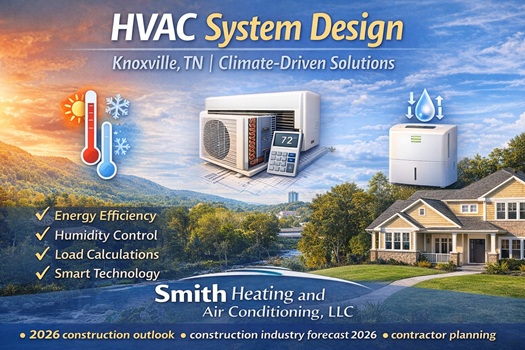

HVAC system design in Knoxville TN
Tennessee’s climate creates year-round demands that place pressure on heating and cooling systems. Long summers bring heat and moisture, while winters can shift quickly between mild and freezing. Because of this variability, HVAC system design must address more than simple temperature control. Comfort depends on how well systems adapt to seasonal changes.
Homes in Knoxville TN experience these shifts more intensely due to elevation and weather patterns. Indoor comfort can fluctuate if systems are not engineered for balance. Therefore, HVAC system design must respond to both humidity and temperature extremes. Proper planning prevents uneven performance across seasons.
How HVAC System Design Handles Seasonal Temperature Swings
Seasonal variation plays a major role in design decisions. Cooling demands remain high for extended periods, while heating needs arrive in shorter but intense cycles. As a result, systems must transition efficiently without excessive energy use. A design that lacks flexibility often struggles during these transitions.
Equipment that can modulate output performs better during fluctuating conditions. Instead of operating at full capacity constantly, modern systems adjust gradually. This approach reduces wear and stabilizes indoor temperatures. A design that supports modulation improves long-term reliability.
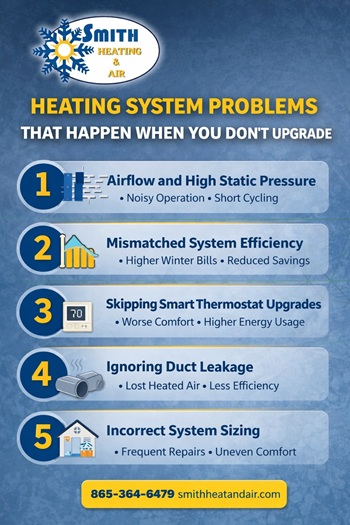
Accurate planning also avoids oversizing, which is common in mixed climates. Oversized systems short-cycle and fail to manage moisture properly. A design focused on right-sizing delivers better comfort and efficiency.
HVAC System Design And Humidity Control Requirements
Humidity is one of the most influential factors affecting HVAC system design in Knoxville TN. Even moderate temperatures can feel uncomfortable when moisture levels rise. Therefore, HVAC system design must address latent heat as carefully as sensible heat. Ignoring humidity leads to indoor discomfort and air quality issues.
High moisture levels also affect building materials and long-term durability. Excess humidity can contribute to mold growth and structural stress. Because of this, HVAC system design often includes enhanced moisture removal strategies. These solutions protect both comfort and property value.
Proper airflow and run times support effective dehumidification. Systems that operate consistently remove moisture more efficiently. HVAC system design that balances airflow and capacity creates healthier indoor conditions.
Energy Efficiency And HVAC System Design Considerations

HVAC system design in Knoxville TN
Energy costs remain a concern for many homeowners, making HVAC system design a critical factor. Extended cooling seasons increase operating expenses when systems are inefficient. Therefore, HVAC system design must prioritize reducing waste while maintaining comfort. Efficiency begins with proper planning rather than equipment alone.
Modern efficiency standards influence both equipment selection and layout. High-efficiency units perform best when paired with thoughtful system design. One that integrates insulation and airflow delivers measurable savings. Poor design limits even the best equipment.
In residential HVAC design Knoxville TN projects, building orientation and insulation levels matter. Systems must match the structure they serve. HVAC system design aligned with real-world conditions reduces unnecessary energy use.
Load Calculations And HVAC System Design Accuracy
Accurate calculations are the foundation of reliable design. These calculations consider square footage, insulation, windows, and occupancy patterns. When done correctly, they prevent performance issues. A design based on estimates often fails during peak conditions.
Tennessee’s variable climate amplifies the impact of small errors. Systems may struggle during extreme heat or cold spells. Therefore, it relies on detailed data rather than assumptions. Precision supports consistent comfort.
Custom HVAC load calculations also improve humidity control. Proper sizing allows systems to run long enough to remove moisture. HVAC system design grounded in analysis delivers predictable results.
Technology Choices That Support HVAC System Design Goals
Technology selection directly influences design outcomes. Variable-speed equipment adjusts output based on demand rather than running at full capacity. This improves efficiency and comfort. HVAC system design that includes variable operation reduces energy waste.
Smart controls enhance climate responsive HVAC planning by responding to real-time conditions. These systems adjust automatically to temperature and humidity changes. As a result, it becomes more adaptive. Intelligent controls support daily comfort.
Duct design also matters. Poorly sealed ducts waste energy and disrupt airflow. An HVAC system that prioritizes duct integrity maintains performance throughout the home.
Maintenance Factors That Affect HVAC System Design Performance
Even well-planned design requires proper maintenance. Tennessee’s long operating seasons place steady demand on equipment. Therefore, an HVAC system must allow easy access for service. Systems that are difficult to maintain decline faster.
Seasonal inspections address airflow, moisture, and efficiency issues. Addressing concerns early prevents larger problems. HVAC system design that supports routine service extends equipment lifespan. Maintenance protects the original investment.
Ventilation also plays a role in tightly sealed homes. Fresh air must be balanced with efficiency. HVAC system design in Knoxville TN that integrates ventilation supports indoor air quality.
Helpful Considerations For Climate-Driven HVAC Planning
Before upgrading or replacing a system, homeowners should review several key factors.
- Seasonal humidity levels affect comfort more than temperature alone
- Proper sizing prevents short-cycling and energy waste
- Long operating seasons increase the value of efficient design
Reviewing these points clarifies expectations. Preparation leads to better results. HVAC system design benefits from informed decision-making.
Questions About HVAC System Design
Why does climate matter so much?
Climate determines heating, cooling, and humidity demands. Systems must respond to frequent seasonal changes. Design ensures reliable performance.
Can it reduce long-term energy costs?
Yes, proper design improves efficiency and reduces unnecessary runtime. Over time, this lowers operating expenses. Design influences cost more than equipment brand.
How does it impact indoor air quality?
Design affects airflow, humidity control, and ventilation. Balanced systems reduce moisture and pollutants. This supports healthier indoor environments.
Where Proper HVAC System Design Shows Its Value
HVAC system design shapes daily comfort and long-term efficiency. Climate-specific planning prevents common performance issues. Smith Heating and Air Conditioning, LLC applies experience to every design decision. Thoughtful systems perform better across all seasons.
If your system struggles with comfort or consistency, the design may be the issue. Smith Heating and Air Conditioning, LLC evaluates climate, structure, and usage patterns. The result is HVAC system design built for real Tennessee conditions.
Smith Heating and Air Conditioning
3416 Zion Ln
Knoxville, TN 37931
865-364-6479
https://smithheatandair.com/
Areas Served:
Knoxville, Fountain City, Farragut, Powell, Halls, Karns, Friendsville, Clinton, Concord,
Kingston, Townsend, Greenback, Maryville, Oak Ridge, New Market, Kimberlin Heights, Corryton